Water is arguably the world's most important and valuable resource, providing the backbone to human life. While the uses and effects of water transcend boundaries, the particular area I will be focusing on in this blog is sanitation.
Adequate sanitation is one of the most vital steps in the development of a country. It determines the health of a nation. It is estimated that 80% of disease in developing nations is caused by poor sanitation and 1/5 infant deaths are caused by these water related diseases (The Water Project 2016). This means that the harmful effects of poor sanitation are holding back many African nations from developing further, due to the detrimental health impacts leading to lower life expectancy and higher infant mortality. This furthermore leads to a cycle of poverty: children being too sick too attend school, so lack education to find work later in life, and those adults unable to go into work therefore struggling to provide for their families.
The cost of poor sanitation due to its detrimental effects on productivity is especially severe across Africa. In Kenya alone the cost reaches $324 million with similar trends across the continent (One 2016). This exemplifies the need to start with sanitation when moving towards economic development.
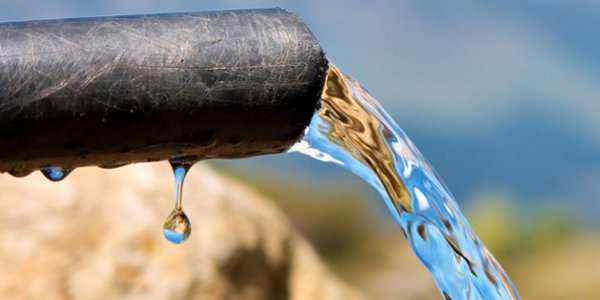
Due to the inexplicable link between water and sanitation, the misconceptions around water scarcity must first be addressed in this topic. Water scarcity is the 'shortage in the availability of freshwater relative to demand', and this is directly linked to the hygiene and health of the public (Taylor 2009). Greater attention has been paid to water scarcity in recent decades due to the growing impact of population growth and climate change. Water scarcity however is not as simplistic as the indicator may make out.
Firstly, the water stress index by Falkenmark (1989) is based on the volume of renewable water resources per capita. This is firstly not a useful indicator because of its labelling of many countries as water stressed due to their population, in a Neo-Malthusian manner (Cairncross 2003). Furthermore, it's use of river discharge as the indicator ignores the other important sources of water such as soil water and groundwater (Taylor 2009). This makes the indicator especially unhelpful in Africa where 51% of freshwater is in groundwater storage.
The challenge of sanitation however isn't clear cut. In 2012 the UN Secretary general announced that 90% of the world's population had access to clean drinking water (Pratka 2012). This however cannot be taken at face value for various reasons. Firstly it is very difficult to measure the level of 'access' to water sources, many statistics are in fact based on the water availability in an area and this doesn't necessarily translate to access. Salami et al (2013) argue that understanding the factors behind access to water supply and sanitation is the vital factor in development interventions.
Secondly, simply because an area is covered by an improved water source, this doesn't mean that it is the only source of water that is used. As uncovered by the pivotal 'Drawers of Water' studies, the majority of households studied across the various sites in East Africa used different sources for different water uses (Thompson et al 2000). This includes the use of unprotected surface water which can simply negate the positive effects of providing an improved water source.
The use of different water sources is based on a multitude of factors including wealth, collection time, season and also the specific use of the water. The complexity of the water use situation means that statistics claiming great leaps in sanitation may be misleading. The access issues to improved water sources need to be addressed, as well as the other factors influencing this choice of water source. Furthermore, sanitation is not just about water access or the different sources used, sanitation is about hygiene and infrastructure. Even if there is adequate access to clean water, if properly built toilets and sewers aren't available which are regularly cleaned, as well as hygienic practices in place such as hand washing, sanitation is not adequate.
This introduction has already touched on the various complexities of water and sanitation, including water availability, access and use, as well as how sanitation goes beyond just water. Throughout this blog I will expand on these complexities and explore the difficulties in water and sanitation across Sub Saharan Africa. I will also look at the various types of management and solutions, drawing on a range of material both academic and newspaper articles.
This introduction has already touched on the various complexities of water and sanitation, including water availability, access and use, as well as how sanitation goes beyond just water. Throughout this blog I will expand on these complexities and explore the difficulties in water and sanitation across Sub Saharan Africa. I will also look at the various types of management and solutions, drawing on a range of material both academic and newspaper articles.
You note well the overlooked problem of inadequate sanitation - you would do well to review the work of Steve Esrey (on 3038 reading list) showing how improvements in sanitation have a greater health impact than improvements in access to safe water. Note: be wary of claims made on websites by organisations seeking self-promotion. You could insert links directly into text if you wish. Keep up the very good blogging.
ReplyDelete